
Collagen Loss After 50: The Signs on Your Face, and How to Support What You Have
Updated · lumivellegummies.com editors · Checked against the public health sources listed at the end
The short answer. Collagen is the protein that gives skin its thickness and firmness. Everyone makes less of it with age, but women lose it fastest right after menopause: the American Academy of Dermatology says about 30% in the first five years. On the face, that shows as a softer jawline, lines that stay, thinner and crepey skin.
You cannot stop time, but you can protect the collagen you have and support the body's own production: sun protection, no smoking, a retinoid or peptide product, enough vitamin C, and steady daily habits. Here is how it all fits together.
What collagen does for skin
Collagen is the most abundant protein in the body, and in the skin it forms the framework of the deeper layer, the dermis. Picture a mattress: collagen is the springs, elastic fibers let it bounce back, and moisture-holding molecules fill the spaces. When the springs are strong and plentiful, the surface above stays smooth and firm.
The skin contains several types of collagen. Type I is the most common and gives strength. Type III sits alongside it and is especially plentiful in younger skin. Researchers who review skin aging after menopause describe both types falling.
How fast it drops after 50
Collagen declines slowly through adult life. For women, menopause changes the pace. Estrogen helps the skin keep its collagen, so when estrogen falls the curve bends down sharply.
| Stage | What happens to skin collagen | Source |
|---|---|---|
| Adult years before menopause | Slow, steady decline | MedlinePlus, Mayo Clinic |
| First 5 years of menopause | About 30% lost | American Academy of Dermatology |
| After those 5 years | Roughly 2% a year | Thornton, Dermatoendocrinology 2013 |
That shape explains why the change feels sudden for so many women in their early 50s, and why the menopause years are the most valuable time to protect the skin. Our guide on menopause skin changes covers the rest of what estrogen does.
The signs on your face
- A softer jawline and neck. The contour from ear to chin blurs, and you start tilting your chin up in photos.
- Lines that stay. Smile lines and lines around the mouth remain when your face relaxes.
- Thinner skin. It looks more delicate, bruises more easily and shows small veins.
- Crepey texture. On the neck, under the eyes and on the chest.
- Slower bounce-back. A gentle pinch on the back of the hand takes longer to smooth out.
- Makeup that settles. Foundation outlines texture instead of hiding it.
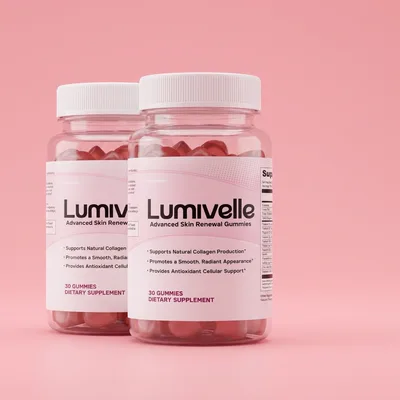
Where LumiVelle Gummies fit. LumiVelle is a skin renewal gummy supplement: rosy-red, heart-shaped gummies, 30 to a bottle, taken as the label directs. It sits next to your sunscreen and moisturizer, not in place of them. See the three kits, from $33 a bottle.
What speeds it up
Age and hormones set the baseline. Habits decide how much faster it goes.
- Sun. The AAD says the sun plays a major role in prematurely aging skin. UV light breaks collagen down and slows its repair.
- Smoking. The AAD says smoking greatly speeds up how quickly skin ages, and Mayo Clinic notes it narrows blood vessels and damages collagen.
- Tanning beds. Concentrated UV, with the same effect as sun, faster.
- Very little sleep and constant stress. Both make skin look tired and slow its recovery.
How to protect and support it
Protect what you have
- Broad-spectrum sunscreen, SPF 30 or higher, every day, on the face, neck and hands.
- Shade, a wide-brimmed hat and sunglasses in strong sun.
- Quit smoking, the single biggest change many women can make.
Support the surface
- A retinoid at night if your skin tolerates it; the AAD also names retinol or peptides for menopausal skin.
- Moisturizer with hyaluronic acid or glycerin, morning and night.
Support from the inside
- Vitamin C. The NIH Office of Dietary Supplements explains that the body needs vitamin C to make collagen. Citrus, berries, peppers and broccoli are good food sources.
- Enough protein in your diet, since collagen is built from amino acids such as glycine and proline.
- A daily skin supplement, if you choose one. The evidence for oral collagen is early: a 2019 systematic review of 11 randomized trials found promising results for skin elasticity and hydration and asked for more research. Treat any supplement as support, not a treatment.
For a frank comparison of the supplement formats, read gummies vs capsules vs powders vs creams.
Collagen myths worth dropping
"More collagen in the jar means more collagen in your skin."
Collagen molecules in a cream are too large to reach the dermis and replace what was lost. Creams help in other ways, such as moisture and, with retinoids, texture, but they do not restore the springs of the mattress.
"Grams are all that matter."
Collagen powders often compete on how many grams fit in a scoop. The body's own production also depends on other nutrients, such as vitamin C, and on protecting what you have from sun and smoke.
"It is too late to bother."
Collagen keeps declining after menopause, about 2% a year, which means there is always collagen worth protecting. Sunscreen started at 60 still protects the skin you have at 60.
"A supplement replaces sunscreen."
No supplement does. Sun protection is the foundation; supplements, if you take them, sit on top of it.
How to track your own skin
Because collagen changes are slow, the mirror is a poor judge. A simple routine gives you real information:
- Take a photo on day one, in the same window light, at the same time of day, without makeup or filters.
- Take the same photo every two weeks: front, left side, right side, and one with your chin slightly down.
- Note what you changed and when: a new retinoid, a supplement, more sunscreen.
- Compare day one with the end of month three side by side.
That habit also tells you, honestly, whether any product you are paying for is worth keeping.
Type III and the LumiVelle story
The makers of LumiVelle build their whole formula story around one idea: the sagging look starts under the surface, with fading Type III collagen support, which they call the collagen of youth. Their answer is a 4-step system they call the Collagen Reset: Korean gelatin to rebuild (the makers point to its glycine and proline, building blocks found in collagen), PDRN to accelerate the renewal, resveratrol to shield what you rebuild, and vitamin C to lock it in.
What the bottle itself says is simpler and worth knowing: LumiVelle Advanced Skin Renewal Gummies support natural collagen production, promote a smooth, radiant appearance and provide antioxidant cellular support. The Supplement Facts panel lists vitamins A, C, D, E, B6 and B12, folate, biotin, pantothenic acid, iodine and zinc. Each bottle holds 30 rosy-red, heart-shaped gummies, taken as the label directs, and the brand describes a 3-month protocol.
That fits the honest picture on this page: protect your collagen from the outside, support it from the inside, and give it months, not days. If the jawline is your main concern, the guide on the sagging jawline and neck goes deeper.
Talk to your doctor before taking LumiVelle or any supplement if you are pregnant or nursing, take medication or have a medical condition.
LumiVelle Gummies: today's kits
Three kits, one secure checkout. The 3-bottle kit brings each bottle to $33, shipping is free on every kit, and each one carries the same 60-day money-back guarantee.
$89 total · 70% off
Free shipping
Choose 2 Bottles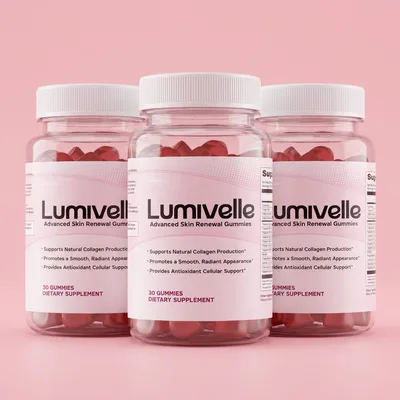
$99 total · 78% off
Free shipping
Get 3 Bottles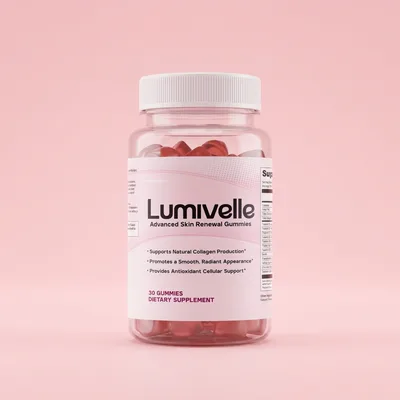
$79 total · 47% off
Free shipping
Choose 1 BottleSecure checkout · 60-day money-back guarantee
Your statement shows BEMONY*LUMIVELLE. Not sold on Amazon, Walmart or eBay, where the guarantee does not apply.
Common questions
What are the signs of collagen loss in the face?
A softer jawline and neck, lines that stay after you stop smiling, thinner skin that looks more fragile, crepey texture on the neck and under the eyes, and skin that takes longer to bounce back when pressed.
How fast do women lose collagen after menopause?
The American Academy of Dermatology says skin loses about 30% of its collagen in the first five years of menopause. Reviews of the research describe a slower loss of about 2% a year after that.
What speeds up collagen loss?
Sun exposure is the biggest outside factor, followed by smoking. Both break down collagen faster than age alone.
Does vitamin C help collagen?
The body needs vitamin C to make collagen, according to the NIH Office of Dietary Supplements. Most people get enough from food; vitamin C is also printed on the LumiVelle Supplement Facts panel.
What is Type III collagen?
Type I and Type III are the main collagens in the skin. Reviews describe both dropping after menopause. The LumiVelle makers call Type III the collagen of youth and build their formula story around supporting it.
Can I rebuild collagen with a cream?
Retinoids and peptides can help the surface over months, and sunscreen protects what you have. The American Academy of Dermatology notes that a cream cannot penetrate deeply enough to lift sagging skin.
Sources
- American Academy of Dermatology: Caring for your skin in menopause
- Thornton MJ. Estrogens and aging skin. Dermatoendocrinology, 2013 (PMC)
- NIH Office of Dietary Supplements: Vitamin C fact sheet for consumers
- American Academy of Dermatology: 11 ways to reduce premature skin aging
- Mayo Clinic: Wrinkles, symptoms and causes
- MedlinePlus: Aging changes in skin
- Choi FD et al. Oral Collagen Supplementation: A Systematic Review of Dermatological Applications. J Drugs Dermatol, 2019 (PubMed)
These sources describe skin and aging in general. They do not review LumiVelle.